Accutane: Everything You Need to Know
What Accutane is, how isotretinoin clears severe acne, who it is for, course length, iPLEDGE requirements, success rates, and brand options explained.
Understanding Isotretinoin: The Basics
Accutane is the best-known brand name for isotretinoin, an oral retinoid derived from vitamin A and the most effective medication available for severe acne. The FDA approved isotretinoin in 1982, and since then more than 19.8 million prescriptions have been written in the United States alone. Although the original Accutane brand was discontinued by Roche, the name is still widely used to refer to isotretinoin in general.
Unlike antibiotics or topical treatments that manage acne symptoms, isotretinoin targets every major cause of acne at once — which is why it remains the only therapy capable of producing long-term remission after a single course.
How Accutane Works
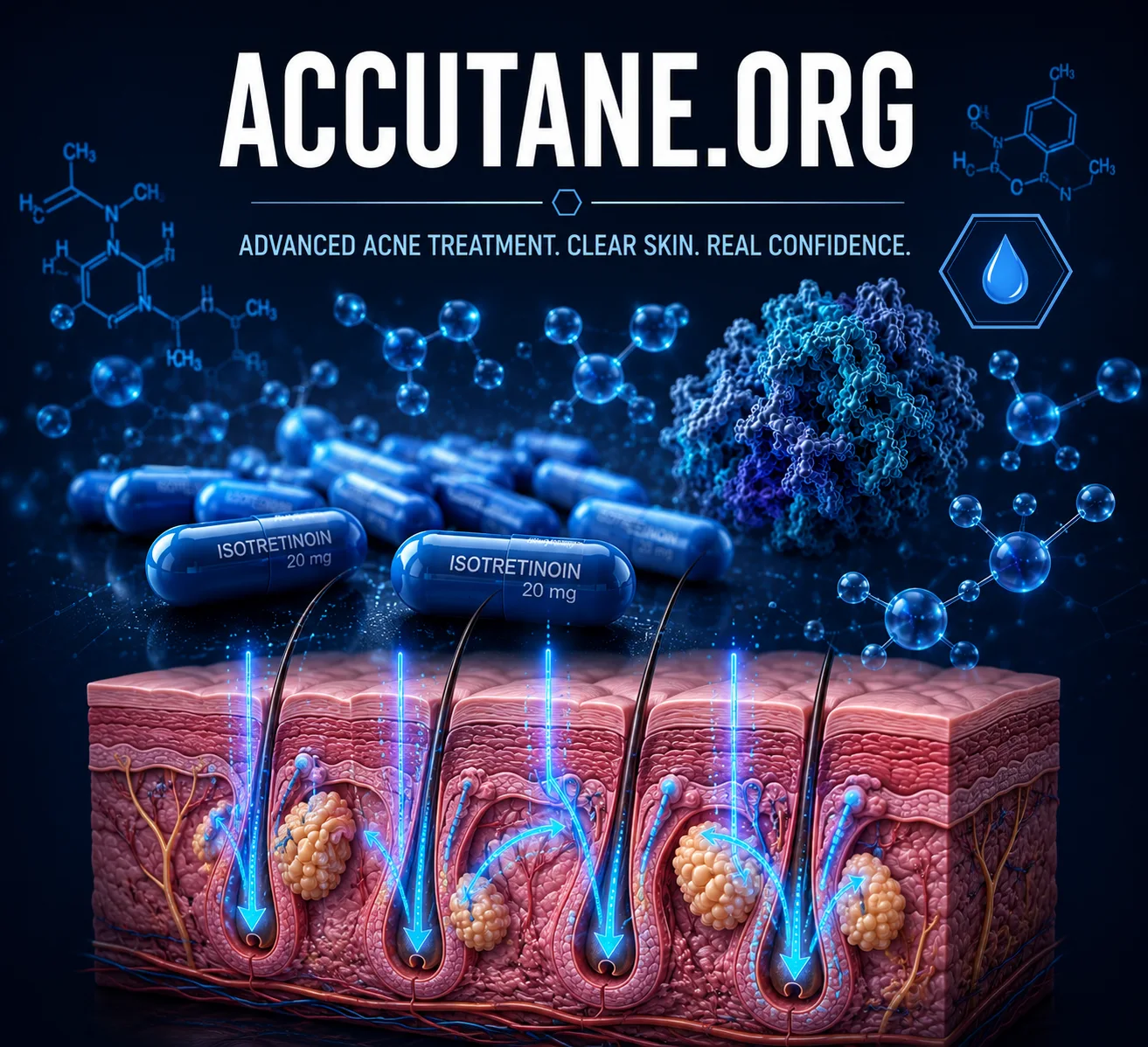
Isotretinoin attacks acne through four distinct mechanisms working simultaneously:
Four mechanisms of action:
- 1Sebum reduction — shrinks the skin's oil glands and cuts sebum production by up to 90%
- 2Gland shrinkage — physically reduces the size of sebaceous glands, removing the environment acne bacteria need
- 3Anti-inflammatory action — calms the deep inflammation behind painful nodules and cysts
- 4Normalized keratinization — stops skin cells from sticking together and clogging pores
Isotretinoin reduces sebum production by up to 90% within the first weeks of treatment — no other acne medication comes close to this effect.
Who Is Accutane For?
Dermatologists reserve isotretinoin for severe nodular or cystic acne, and for moderate acne that has failed to respond to other treatments such as topical retinoids, benzoyl peroxide, and oral antibiotics. It is also considered when acne is causing scarring or significant psychological distress.
Typical candidates include:
- 1Severe nodular or cystic acne with deep, painful lesions
- 2Acne that has not responded to at least two other treatment approaches
- 3Acne that is producing permanent scarring
- 4Acne causing serious emotional or social distress
What a Treatment Course Looks Like
A standard course lasts 15 to 20 weeks. Dermatologists aim for a cumulative dose of 120–150 mg per kilogram of body weight over the full course, because reaching this target is what drives long-term remission. Daily dosing usually starts low and increases gradually — the full timeline is covered in our treatment course guide, and the adjustment period is covered in detail on our side effects page.
The iPLEDGE Program
In the United States, every patient taking isotretinoin must enroll in iPLEDGE, an FDA-mandated risk management program. Its primary purpose is preventing pregnancy during treatment, because isotretinoin causes severe birth defects.
iPLEDGE requirements:
- 1Monthly visits with the prescribing physician
- 2Monthly blood tests, including pregnancy tests for patients who can become pregnant
- 3Two forms of contraception required for patients who can become pregnant
- 4Monthly online attestations before each prescription can be filled
Success Rates and Long-Term Results
About 85% of patients see significant or complete clearing after one course, and 60–80% remain in long-term remission without further treatment.
Relapse is more common in younger patients, in those with hormonal acne, and when the cumulative dose target was not reached. When acne does return, it is usually milder and may respond to a second course or to maintenance therapy.
Brands and Generic Versions
Isotretinoin brands available in the US
Accutane
Original brand
Discontinued; name still used generically
Absorica / Absorica LD
Branded
Absorbs well with or without food
Claravis
Generic
Most commonly dispensed generic
Amnesteem
Generic
Widely available
Myorisan
Generic
Widely available
Zenatane
Generic
Widely available
All versions contain the same active ingredient. Aside from Absorica's improved absorption without food, the clinical differences between brands are minimal — most patients receive whichever generic their pharmacy stocks.
Before You Start: A Checklist
Before starting isotretinoin:
- 1Confirm your acne severity and treatment history with a dermatologist
- 2Complete baseline blood tests (lipids, liver enzymes, pregnancy test if applicable)
- 3Enroll in iPLEDGE and understand the monthly requirements
- 4Stock up on lip balm, gentle moisturizer, and SPF 30+ sunscreen
- 5Plan around major life events — dryness and the initial purge are most intense in the first two months
- 6Discuss any history of depression or inflammatory bowel disease with your doctor
Frequently Asked Questions
Yes. Accutane is the original brand name for isotretinoin, discontinued by Roche years ago. Today, pharmacies dispense generic isotretinoin or other brands like Absorica and Claravis, but patients and doctors still commonly say Accutane when referring to any isotretinoin product.
Roughly 85% of patients achieve significant or complete clearing after one full course. Between 60% and 80% stay clear long term without additional treatment. Reaching the cumulative dose target of 120–150 mg/kg is the strongest predictor of lasting remission.
Yes, always. Isotretinoin is a prescription-only medication in every country, and in the United States it additionally requires enrollment in the iPLEDGE program with monthly check-ins. Buying isotretinoin without a prescription is unsafe and illegal — the monitoring exists for good reasons.
Most patients notice reduced oiliness within two weeks, but visible acne improvement typically starts around months two to three. Many people experience a temporary purge during weeks two through six before improvement begins. Maximum results often appear one to two months after finishing the course.
For most patients, no — 60–80% remain clear long term. Relapse risk is higher for younger teenagers, people with hormonal acne, and anyone who stopped before reaching the cumulative dose target. Returning acne is usually milder and may need only topical maintenance.
Isotretinoin can raise triglycerides, cholesterol, and liver enzymes in a minority of patients, so monthly labs catch changes early. Patients who can become pregnant also need monthly pregnancy tests, because isotretinoin causes severe birth defects if taken during pregnancy.
Accutane.org is an independent educational resource. We are not affiliated with Roche, any pharmaceutical manufacturer, or any healthcare provider. This content is for informational purposes only and does not replace advice from a licensed dermatologist or physician.